


Seagrove Pottery & The Legacy of Ben Owen III: The Revival of Chinese Blue

Why Seagrove Draws Designers, Not Just Collectors
Seagrove, North Carolina has been an epicenter of American ceramics for more than 250 years—representing the longest continuous pottery tradition anywhere in the United States.
Native families were shaping clay from that ground three thousand years before English and German settlers arrived and kept the wheel turning after. Today, in a town of a few hundred people, something like a hundred working potters still throw and fire within a few miles of each other — the highest concentration of potters found anywhere outside Japan.
That density is exactly why interior designers and serious collectors of handmade decor treat Seagrove as a source, not a scenic stop. A vessel off a factory line looks like every other vessel off that line. Seagrove handmade pottery doesn't — the clay, the glaze, the days in a wood kiln all leave their own signature. It's the same reason a designer would rather commission a piece directly than order one from a catalog: what comes back is unrepeatable, made by someone who can tell you exactly why it looks the way it does.
Ben Owen III has spent his career becoming one of the main reasons people make that trip.
The Glaze That Had to Be Rebuilt From Memory

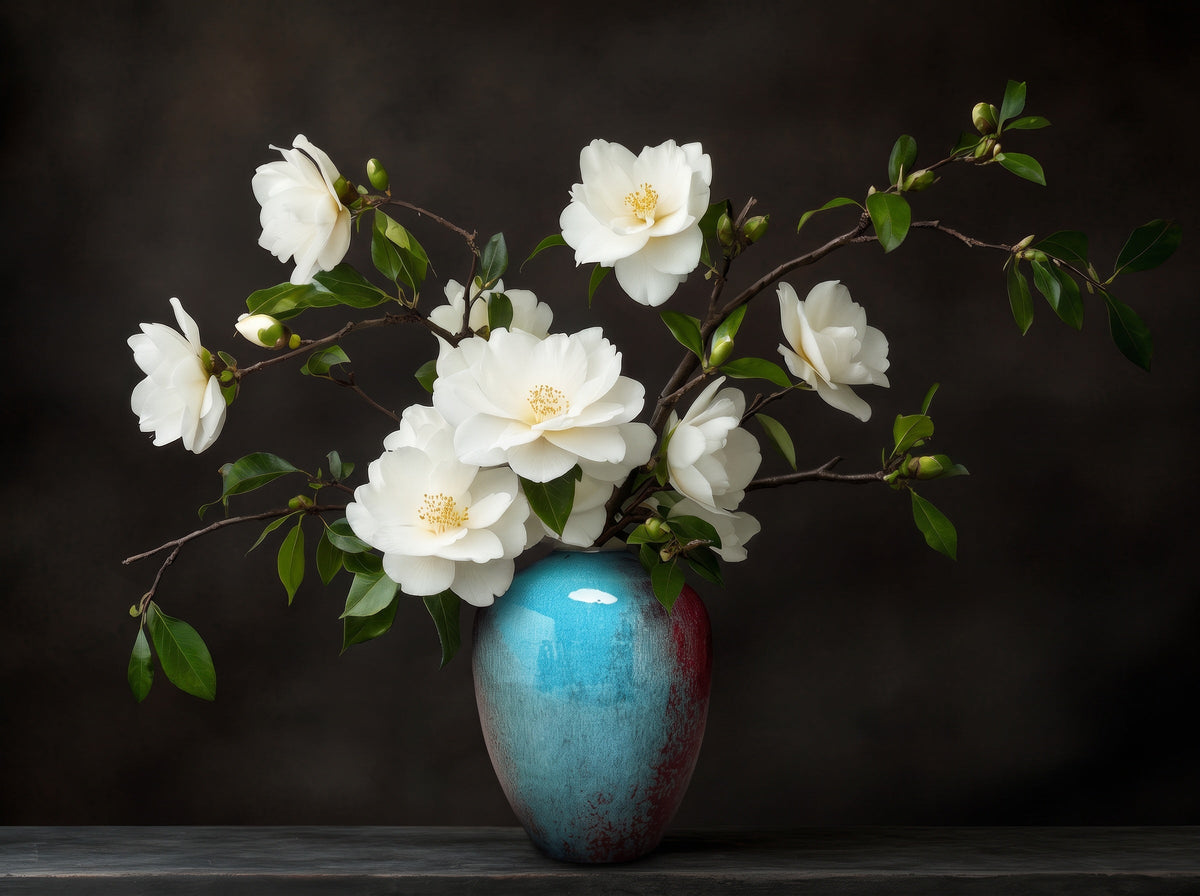
These were all made with the Owen family's Chinese Blue glaze. The coloring agent is copper — held back from oxygen it comes out red, given air it turns blue. Ben's kiln burns for four days, and the flame doesn't move through it evenly. A pot standing where the fire wraps hard around one shoulder comes out looking split down the middle. One tucked further back freckles all over. Nobody decides which.
There's a version of blue that only exists because a man refused to let a good thing disappear.
Ben Owen’s grandfather developed it for Seagrove’s Jugtown Pottery in the 1930s, working in copper glazes until he landed on something nobody else in Seagrove, North Carolina had — a blue with real depth to it, no two firings quite the same.
The blue wasn't the only import. Starting in the 1920s, Jugtown founder Jacques Busbee walked Owen through museum collections in New York and Washington — and sent him home to work out how each piece was made. Owen came back with forms Seagrove had never made before: Han-dynasty vases, Sung-dynasty bowls, Korean bottles, and Persian jars. None of it was imitation for its own sake — it was restraint borrowed from halfway around the world and set down in Piedmont clay.
Then, in 1947, Jacques Busbee died, and his widow asked that the glaze stop being made at all. The formula went with it. Gone. Ben Owen Sr. didn't have the original recipe written down anywhere. He had memory, and a kiln, and the same stubbornness that had made the glaze in the first place. He went back to copper, back to a firing around 2,250 degrees, and worked out something close enough to call it back into existence. Not identical — he was rebuilding it from the outside, the way you'd reconstruct a house fire had taken, from what you remembered of the rooms. Close enough that it's still called Chinese Blue today, and his grandson still uses that same recovered recipe.
Six Generations, One Wheel
That grandson is Ben Owen III, and this is really a story about six generations of potters. Ben Owen Sr. was himself a fourth generation potter, and ran his own studio until poor health forced him to stop working the wheel in 1972. His son — Ben Owen Jr., known as Wade — kept the family's forms alive. And Ben III has been at a wheel since he was eight years old, apprenticed formally to both of them by thirteen, the third Ben Owen to spend a life figuring out what this particular clay, from this particular patch of North Carolina, is still capable of.
Honoring the Past While Building Something New
He didn't stop at what he inherited, either. Ben studied ceramics formally at East Carolina University, then spent time in Tokoname, Japan in 1995, learning a wood-firing tradition with its own centuries of history and its own relationship to ash and unpredictability. He came home and built a four-chambered wood kiln — and started firing pieces the slow way, over four days, tending the fire the entire time. His own father questioned the decision at first. Ben has said since that it let him honor his past while forging something new, the same way his grandfather had, seventy-five years before him.
That's the part of this family's story we think matters most: none of it was ever about freezing a moment in time and keeping it under glass. Every generation took what came before and decided, on their own terms, what it should become next.
Where You Can Find Ben Owen's Work
It hasn't stayed quiet in Seagrove, either. Ben's work sits in the Smithsonian and the Mint Museum of Craft and Design. Interior designers and architects commission him directly for pieces built for specific rooms — one client, working with him on a foyer piece, said simply that he sent sketches until they'd found the right form, the right glaze, the right dimensions for the space. His large-scale vessels have gone into hotel lobbies from the Ritz-Carlton Tokyo to the Umstead in Cary, North Carolina, and into private collections that don't advertise themselves. None of that changes what happens in the workshop. It's just what happens when the work is good enough that people who could commission anyone keep choosing him.
We have a small selection of Ben’s pieces, fired in that same four-day wood kiln, as the opening drop for our Short List on October 4th at 4pm — you'll find it on the site once it's ready.
Questions About Ben Owen III and Seagrove Pottery
Who is Ben Owen III?
Ben Owen III is a wood-fire potter in Seagrove, North Carolina, and the third generation of his family to work at the wheel under the Owen name — following his grandfather, Ben Owen Sr., and his father, Ben Owen Jr. His five-piece release opens Southern Crafted's Short List drop on October 4, 2026.
What is Chinese Blue glaze?
Chinese Blue is a copper-based glaze first developed by Ben Owen Sr. at Jugtown Pottery in the 1930s. Production stopped in 1947 after Jugtown's founder died, and the original formula was lost. Ben Owen Sr. later rebuilt a version from memory, fired around 2,250°F, and Ben Owen III still uses that recovered recipe today.
Why is Seagrove, NC known for pottery?
Seagrove has the longest continuously running pottery tradition in the United States, dating back more than 250 years, and today has one of the highest concentrations of working potters anywhere outside Japan — around a hundred potters in a town of a few hundred people.
Where has Ben Owen III's pottery been shown or used?
His work is held in the Smithsonian and the Mint Museum of Craft and Design, and he's been commissioned directly by interior designers and architects for site-specific pieces in spaces including the Ritz-Carlton Tokyo and the Mandarin Oriental Boston.
Who is Ben Owen III?
Ben Owen III is a wood-fire potter in Seagrove, North Carolina, and the sixth generation of his family to work at the wheel under the Owen name — following his grandfather, Ben Owen Sr., and his father, Ben Owen Jr. His five-piece release opens Southern Crafted's Short List drop on October 4, 2026.
What is Chinese Blue glaze?
Chinese Blue is a copper-based glaze first developed by Ben Owen Sr. at Jugtown Pottery in the 1930s. Production stopped in 1947 after Jugtown's founder died, and the original formula was lost. Ben Owen Sr. later rebuilt a version from memory, fired around 2,250°F, and Ben Owen III still uses that recovered recipe today.
Why is Seagrove, NC known for pottery?
Seagrove has the longest continuously running pottery tradition in the United States, dating back more than 250 years, and today has one of the highest concentrations of working potters anywhere outside Japan — around a hundred potters in a town of a few hundred people.
Where has Ben Owen III's pottery been shown or used?
His work is held in the Smithsonian and the Mint Museum of Craft and Design, and he's been commissioned directly by interior designers and architects for site-specific pieces in spaces including the Ritz-Carlton Tokyo and the Mandarin Oriental Boston.

Ashley McCorkle
Ashley McCorkle is a founder of Southern Crafted. He comes from a product design background and writes about consumer trends and design.